People

Simon Rubinstein-Salzedo
Founder, Kaleidoscope Circles
Director, Euler Circle
Simon received his PhD in mathematics from Stanford University in 2012 under the direction of Akshay Venkatesh in algebraic number theory. He has done research in many areas of mathematics, including number theory, algebraic geometry, combinatorics, game theory, probability, and complex analysis, and he has also published three books on mathematics. Before founding Euler Circle, Simon taught mathematics at Stanford University and Dartmouth College.
In addition to his teaching at universities, Simon has been teaching mathematics to advanced middle-school and high-school students for over two decades and is extremely popular among his students. He was previously the lecturer for Program II at the Stanford University Mathematics Camp (SUMaC), where he taught algebraic topology. He also worked at The Art of Problem Solving and has taught at many math events and run many math circles in the Bay Area. He is also a coach of the San Francisco Bay Area ARML team and has coached the team to six national championships. His greatest claim to fame in life is probably having a factoring trick named after him.
Simon has also successfully directed mathematics research projects for high-school students, leading to several original papers coauthored with students. His papers can be found on his website. Outside of mathematics, Simon is also an avid musician, chess player, and calligrapher.
Please contact him at simon@eulercircle.com.

Kathryn L. McGill
Director, Curie Circle
Kathryn received her PhD in physics from Cornell University in 2018, working with Paul McEuen on various experiments involving 2D materials. Her dissertation, Two-Dimensional Materials: From Berry Curvature to Wrapping a Microsphere, mainly explores the optoelectronic and mechanical properties of single-layer molybdenum disulfide. Before joining Kaleidoscope Circles, Kathryn worked at the University of Florida as an assistant instructional professor of physics.
As a part of her deep exploration of physics teaching and outreach, Kathryn has self-produced various physics-themed internet projects. While pursuing her PhD, Kathryn ran a YouTube channel called The Physics Factor that focused on the human side of doing physics, featuring Soft Matters, a series that features interviews with Cornell physics professors about their lives and work. During the COVID-19 pandemic, Kathryn wrote a blog called Physics, Explained, which sprouted from her idea to write an introductory physics textbook, one blog post at a time.
In addition to her love of physics, Kathryn enjoys being a dog mom, reading, hiking, crocheting, and playing the viola, among other minor hobbies.
If you are interested in learning more about the physics Kathryn has contemplated over the years, please see her list of publications. You may reach her kathryn.mcgill@kalcircles.com.
Ammar Jahin
Director, Turing Circle
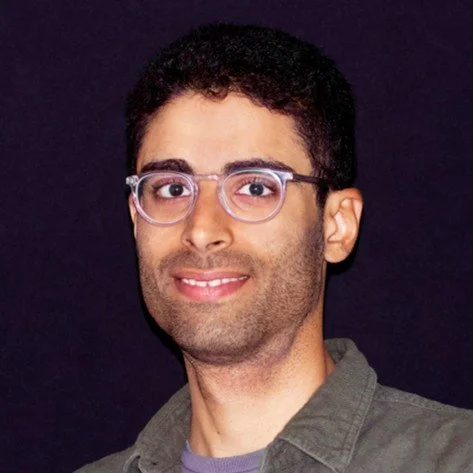
Ammar Jahin received his PhD in physics from the University of Florida in 2023, focusing on topological superconductors and their applications in quantum computation. He went on to work as a postdoctoral researcher at Los Alamos National Laboratory, where he developed theoretical frameworks for superconductivity in graphene-based systems and identified signatures of quantum spin liquids in experimental probes.
Ammar's most recent work sits at the intersection of physics and artificial intelligence, an area he finds both technically rich and full of open problems. He is particularly interested in how ideas from physics can inform and advance machine learning, and vice versa. This interest extends to his mentorship: he volunteers as a mentor for undergraduate thesis students at Zewail University of Science and Technology, some of whom are working on neural quantum states, a rapidly developing area that uses neural networks to represent and simulate quantum many-body systems. He also maintains a blog where he writes pedagogical and exploratory pieces on AI and ML.
A list of Ammar's publications can be found on his Google Scholar page. Outside of work, Ammar likes to spend time on his bike. You can reach him at ammar.jahin@kalcircles.com.
Maxim Gilula
Instructor, Euler Circle
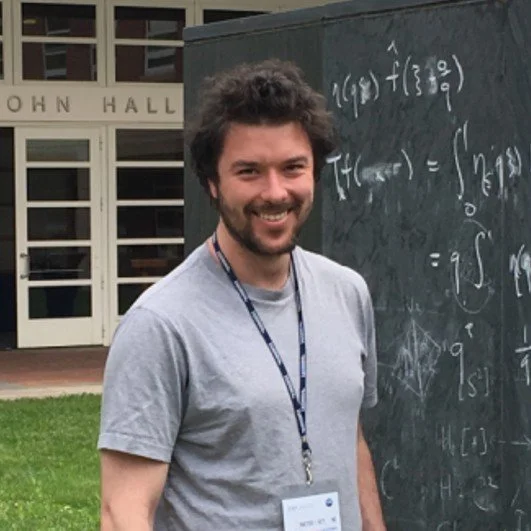
Maxim Gilula received his undergraduate degree at UC Irvine before moving to Philadelphia for grad school in math at UPenn. His research included infinite series, oscillatory integrals, and decoupling. After working as a visiting assistant professor at Michigan State University, he made his way back home to the Bay Area to join Stanford OHS.
He likes to play tennis and video games.
Eric Hallman
Instructor, Euler Circle
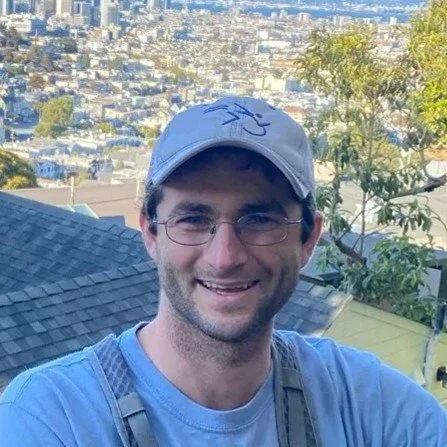
Eric Hallman received his PhD from UC Berkeley in 2019 in computational linear algebra. He has taught classes at UC Berkeley and North Carolina State University, and was most recently a software engineer at Google. Outside of math, he enjoys swimming and baking.
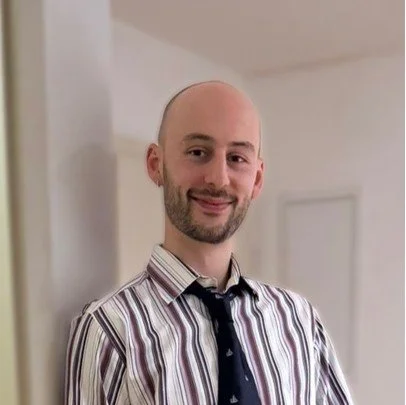
Felix Sefzig
Instructor, Euler Circle
Felix Sefzig completed his undergraduate studies at ETH Zurich and recently received his PhD from the University of Zurich. His research in algebraic geometry focused mainly on the cohomology of algebraic varieties over p-adic fields. Most recently, he has been interested in formal verification and started contributing to the Lean4 math library. Outside of math, he enjoys tennis and climbing.